
Let me take you back a few years when I actually meant to share this story! In the winter of 2021, I listened to Season 2 of the historical true crime podcast Tenfold More Wicked. Season 2 was the story of William Burke and William Hare, two men in Edinburgh in 1827 who sold freshly dead bodies to Professor Robert Knox, a University of Edinburgh anatomy professor. Knox wanted the bodies for hands-on learning for his students, and Burke and Hare couldn’t pass up the opportunity to make some money. There was a shortage of cadavers at the medical school, so Professor Knox couldn’t pass up the opportunity either and they all went into “business” together. I was compelled to visit Scotland the way the host of the podcast set the scene–hiking to the top of a mountain just outside Edinburgh in search of these 200- year- old coffins with handmade dolls inside–perhaps honoring the victims of Burke and Hare. More on that later.
Scotland was already on my list of places to visit, and learning about the tale of Burke and Hare and the places they frequented–or should I say haunted– around Edinburgh (including Arthur’s Seat) sparked a greater interest in me. So I emailed the host, Kate Winkler Dawson, told her how much I enjoyed Season 2 of Tenfold More Wicked and then asked for her itinerary. She responded to me within just a few days and listed all the places she visited. (Arthur’s Seat, The National Museum of Scotland, and more.) Well a year passed by and my boyfriend–now fiancé– and I planned a trip to Ireland–and then on a whim, to satiate my love of historical true crime, we decided to add on Edinburgh so I could visit all the places I heard about in the Burke and Hare podcast.
I had an idea while at the Dublin Airport to email Janet Philp, a guest speaker on the podcast, Head of Administration in the Deanery of Biomedical Sciences at Edinburgh Medical School. Janet studied William Burke– and what inspired her was the skeleton of Burke, who was hanged in 1829 for his part in the murders he committed–and she actually wrote a book titled Burke: Now and Then. I emailed Janet while we were waiting for our flight to take off to Edinburgh, and she responded to me within less than a half hour with dozens of recommendations! I cross-referenced them with the recommendations I’d gotten from Kate. (One of the things on Janet’s list that wasn’t on Kate’s–The Anatomical Museum at the University of Edinburgh.) Some places and locations had changed since the podcast came out. (For example, Burke’s skeleton was removed from The Anatomical Museum and brought to The National Museum of Scotland for an exhibit titled “Anatomy: A Matter of Death and Life.”) This was going to be more of a scavenger hunt than anything else! We went to all the places both Kate and Janet suggested.
Here is a series of pictures and little vignettes from the places we visited on my spooky scavenger hunt:
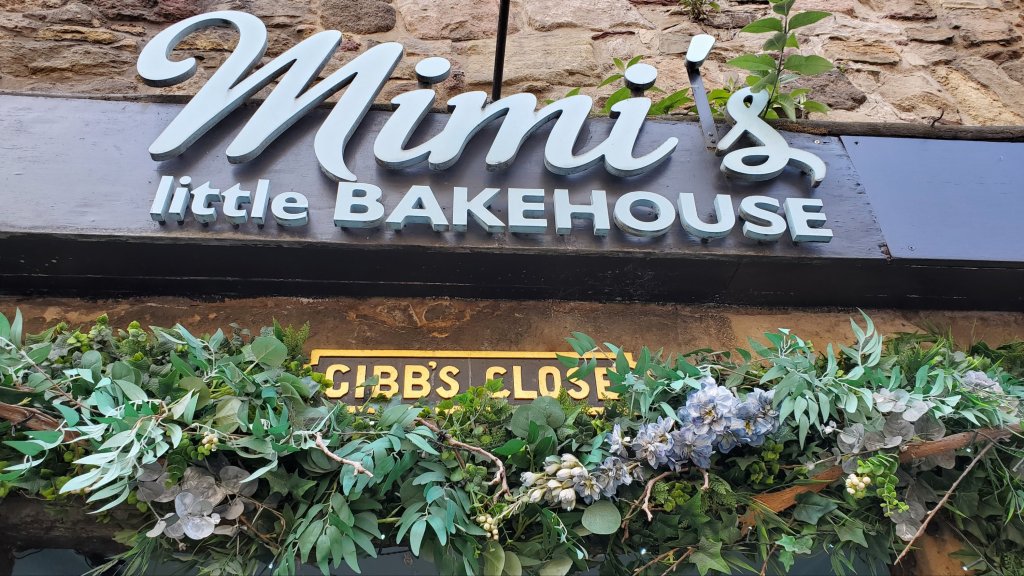
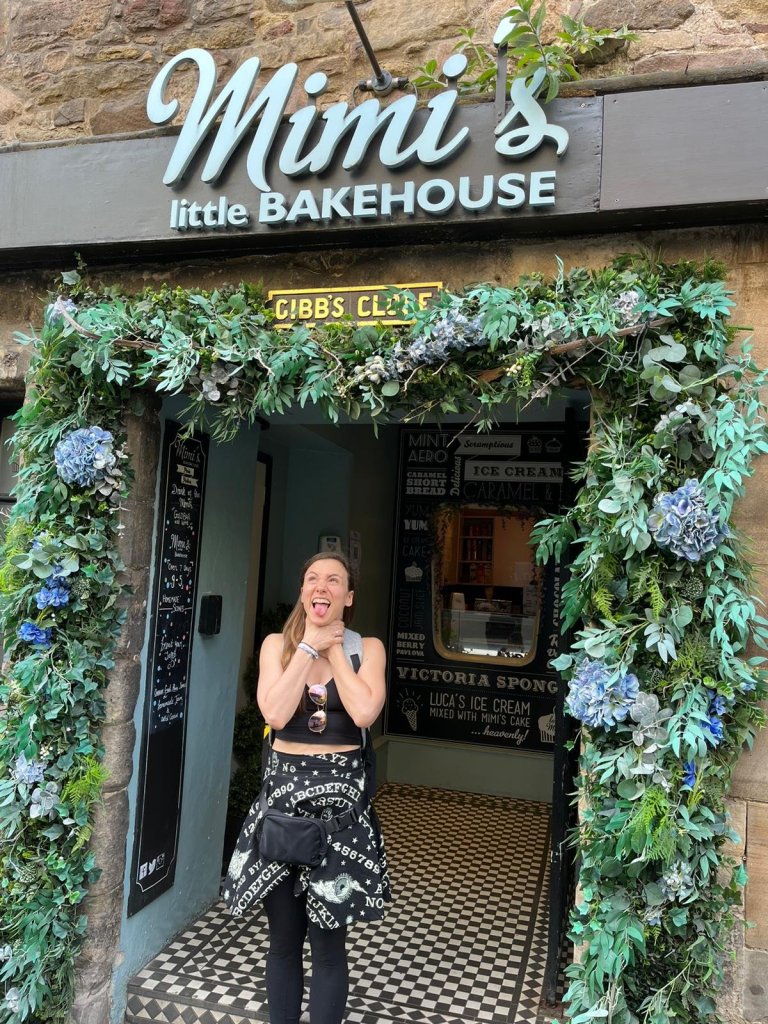
Mimi’s Bakery, aka Gibbs Close. It’s now a chain bakery, but the sign above the building is still there–in the 1800’s, Gibbs Close were tenements–lodges for wayward souls. This is where Burke and Hare killed their first victim, Mary Paterson. It’s also where Burk’s brother lived. Though it’s now a bakery chain, I love how the history is baked right into the architecture.
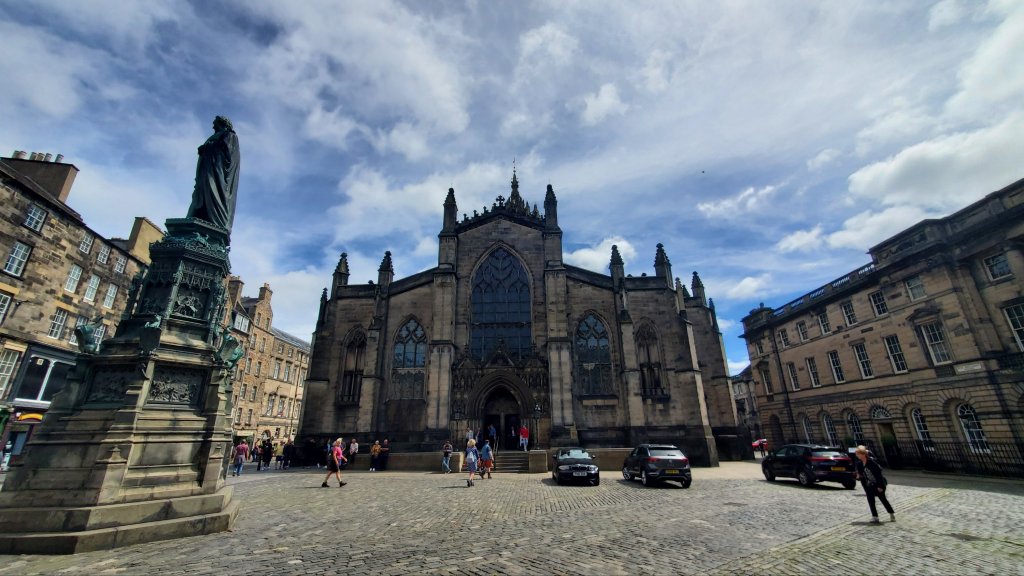
St Guiles Church. We stopped here per recommendation of Kate Winkler Dawson because in her words, “it’s super dark and gothic and creepy.” Right up my alley! We got there right around noon and heard the church bells eerily ring 12 times.

Janet Philps said that the law library in the parliament building used to be the courtroom where Burke & Hare were tried. There was a book about cannibalism displayed in the window, so, maybe, maybe not…(definitely not. Burke and Hare weren’t cannibals.)

Thought we could sneak into the building to search for the library. We couldn’t find any entrance and there was no one around to ask.
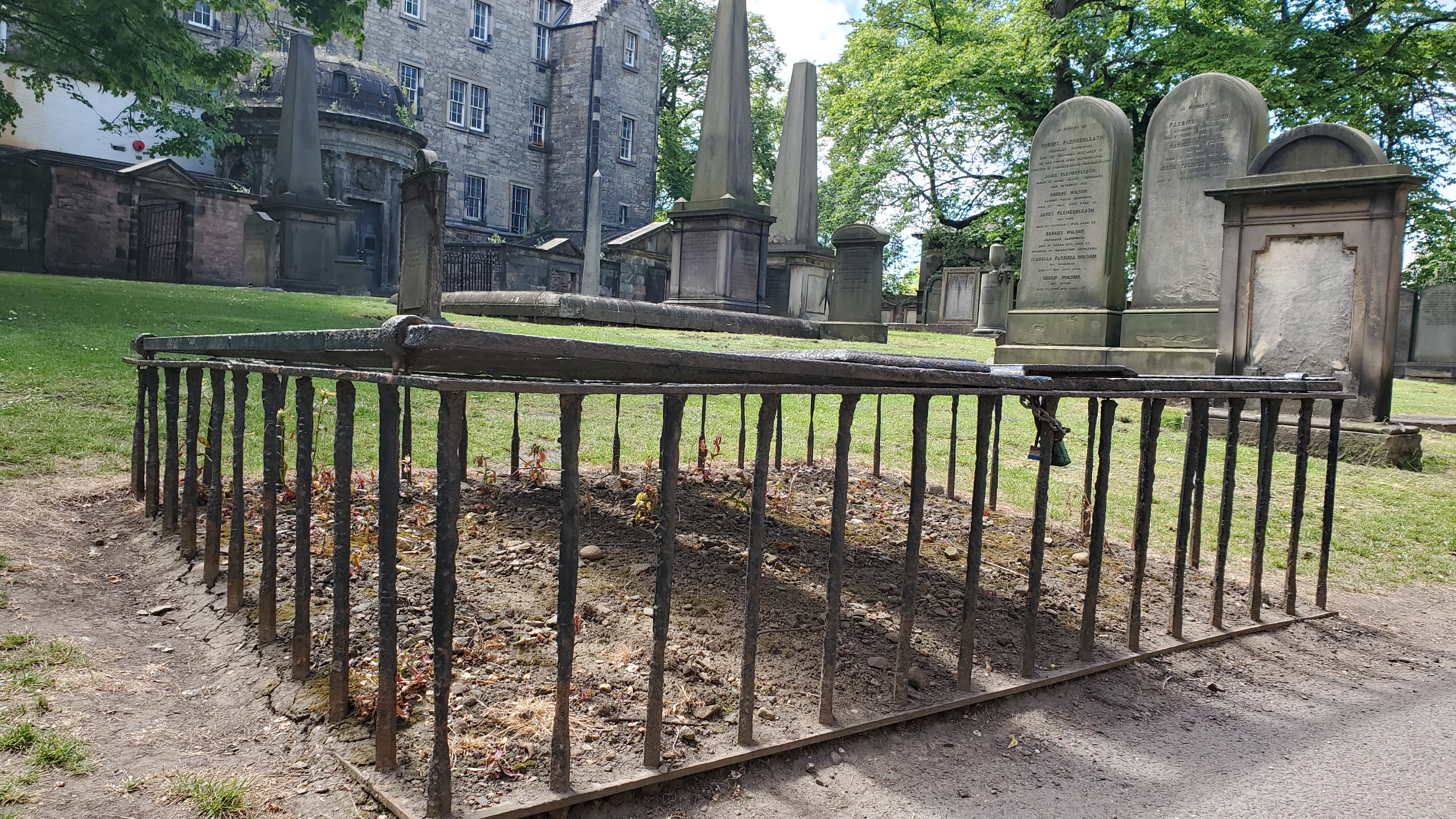
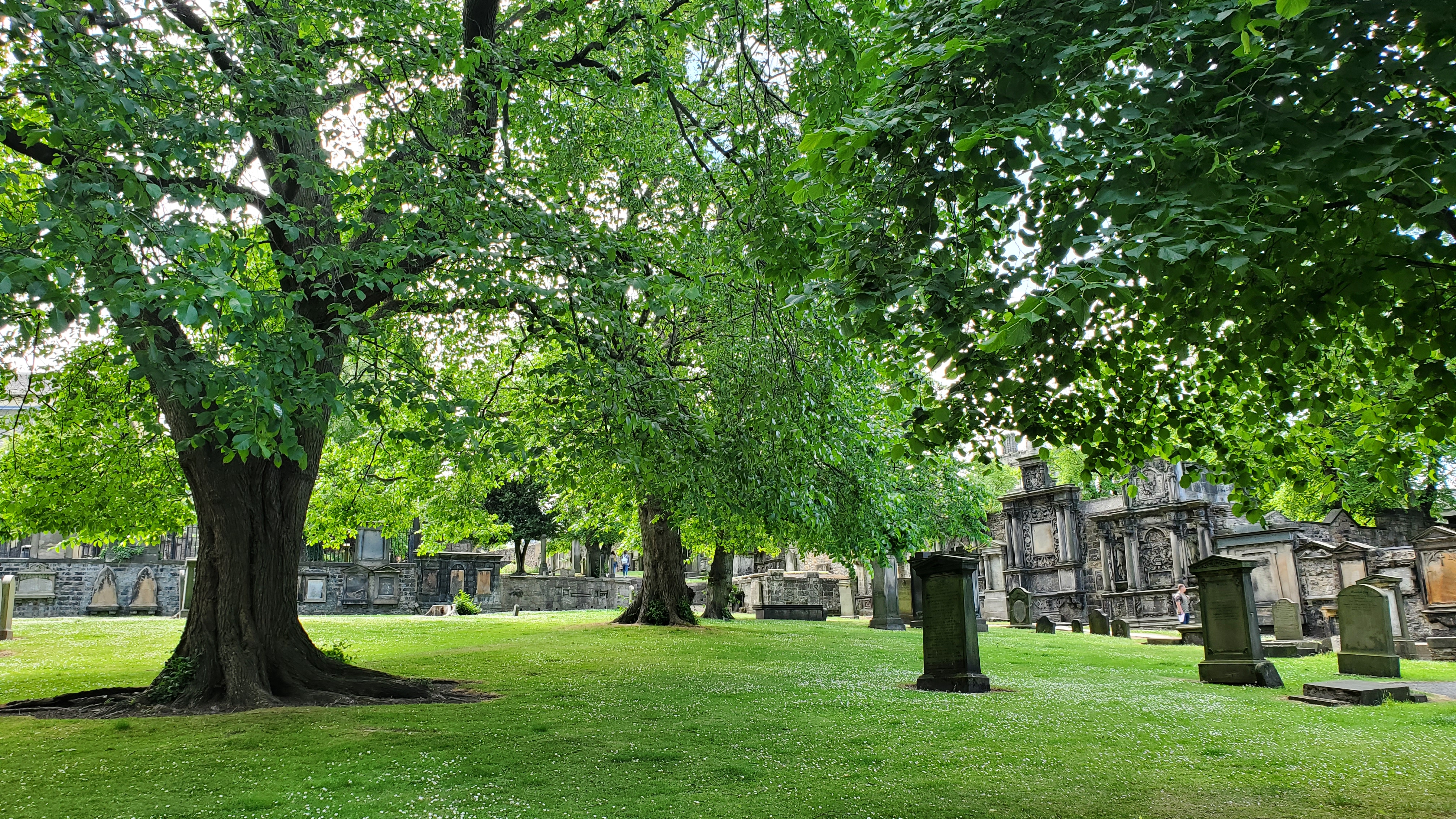
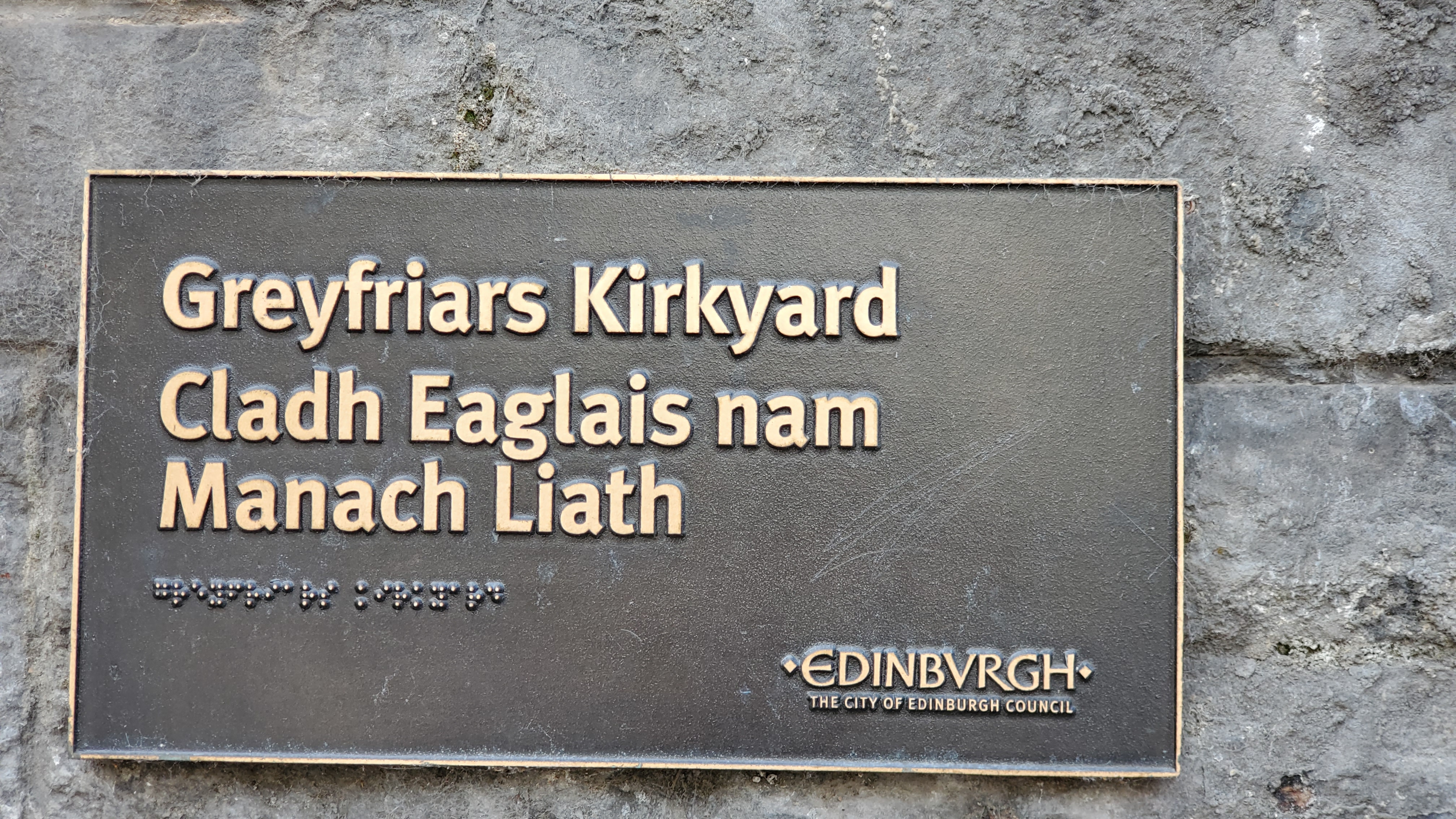

The Greyfriar’s Kirkyard, a famous cemetery, had coffins protected by mortsafes. Mortsafes keep people from robbing graves. They look like old metal cages that protect the ground the coffins are buried in. Burke and Hare weren’t grave robbers, but an imitator after them dug up dead bodies and sold them, thus the catalyst for the Anatomy Act of 1832. This act allowed surgeons, students, and teachers of anatomy to legally dissect unclaimed bodies. We also learnt that JK Rowling got the names of some of her characters from Harry Potter at Greyfriar’s Kirkyard. Tom Riddle is buried there, and Dobby was named after Bobby, a very good dog. I also overheard a guy dressed in robes giving a private Harry Potter tour complain about how this one mausoleum had a poltergeist and then people decided that’s where she got the idea for Peeves in Harry Potter, but I think that guy was just taking his job too seriously.

I bet if I showed the Harry Potter tour guide this picture he’d agree there was a poltergeist in it.

To Victoria’s Street, where we thought we would find the the three brass plates marking the last execution site but turns out it was at the corner of another street. I also had no idea this is apparently the street that inspired Diagon Alley.


Fangirling over an old newspaper cut out of the hanging in the 1800s.

Back to the Caddie’s Shop for the second time (the first time they were closed–the sign said they opened “when we get in.” Love the sass.) The woman who worked there was so nice and gave us some other recommendations. I geeked out so hard over Burke and Hare and purchased a book by Owen Dudley Edwards (who was also on the podcast) and a newspaper from the day the story broke in the papers. We got to see the world’s tiniest Burke and Hare Museum–and inside was a calling card made of Burke’s skin! Apparently a med student stole a piece of his skin while Burke’s body was being dissected. The Caddie Shop owner directed us to the Anatomy Museum at The University of Edinburgh . We first wanted to go to the medical museum at the University of Edinburgh to see Burke’s skeleton on display, but it had been moved. More on that later.
We found out from our friend at the Caddie Shop that Burke’s skeleton was moved from the anatomy museum at University of Edinburgh to the Museum of Scotland for the Anatomy: A Matter of Death and Life exhibit. She told us to go to the Surgeon’s Hall Museum instead where we could see a larger piece of Burke’s skin. There they had a larger piece of his skin and his death mask. You can even see the markings of the noose on the mask. (I think we weren’t allowed to take pictures at this museum.) I also liked learning the history of anesthesia: first ether and then antiseptic, and then sterilization. Imagine getting your arm or leg cut off with a curved blade and nothing to numb you? Ouch!
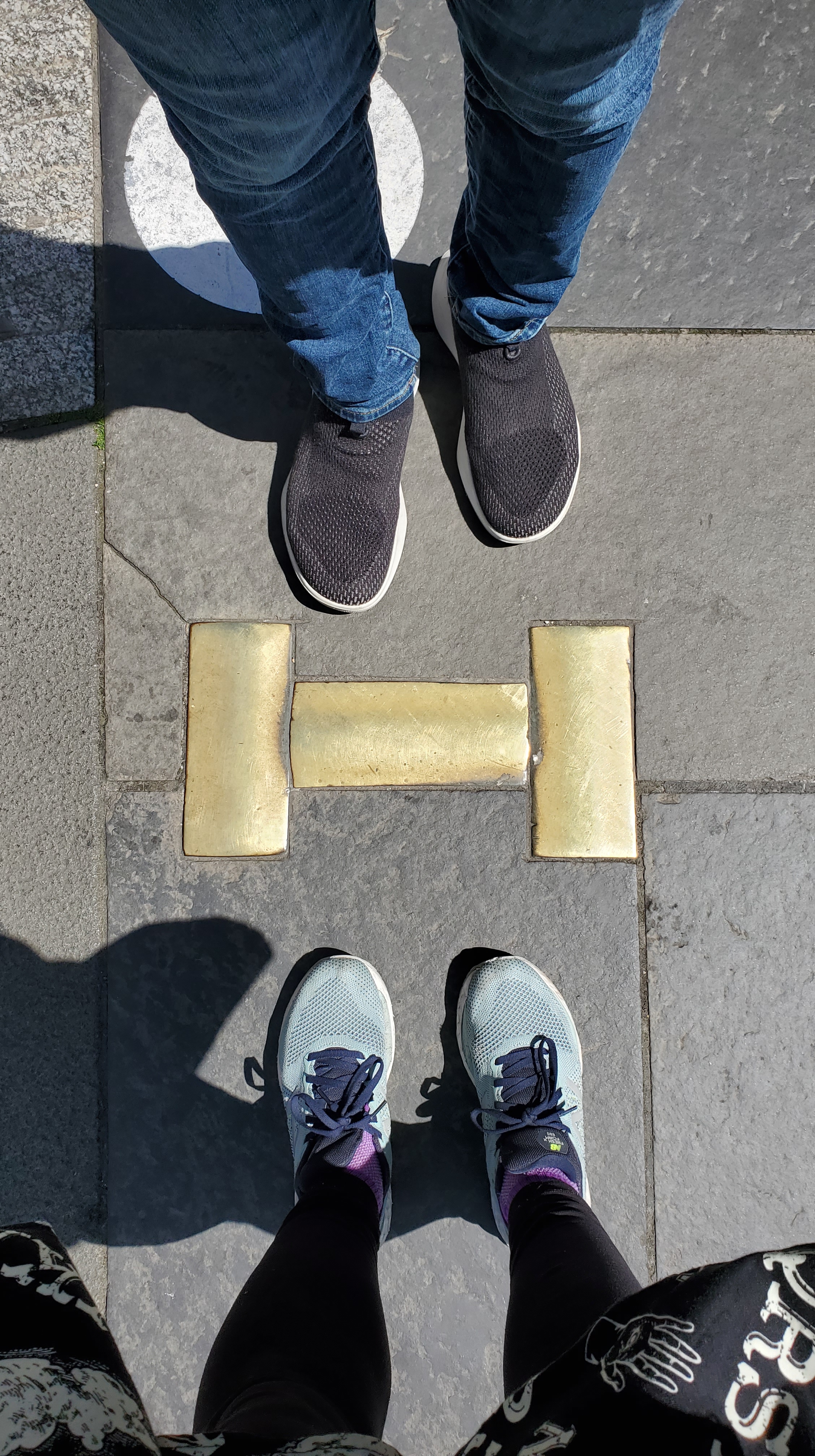
Though we couldn’t locate the site of Burke’s execution in the gallows on our own, fortunately some other guy more notorious than Burke had an entry on TripAdvisor where you could visit the site of the last execution. His name was George Bryce and he was the last public execution in Edinburgh–June 21, 1864.
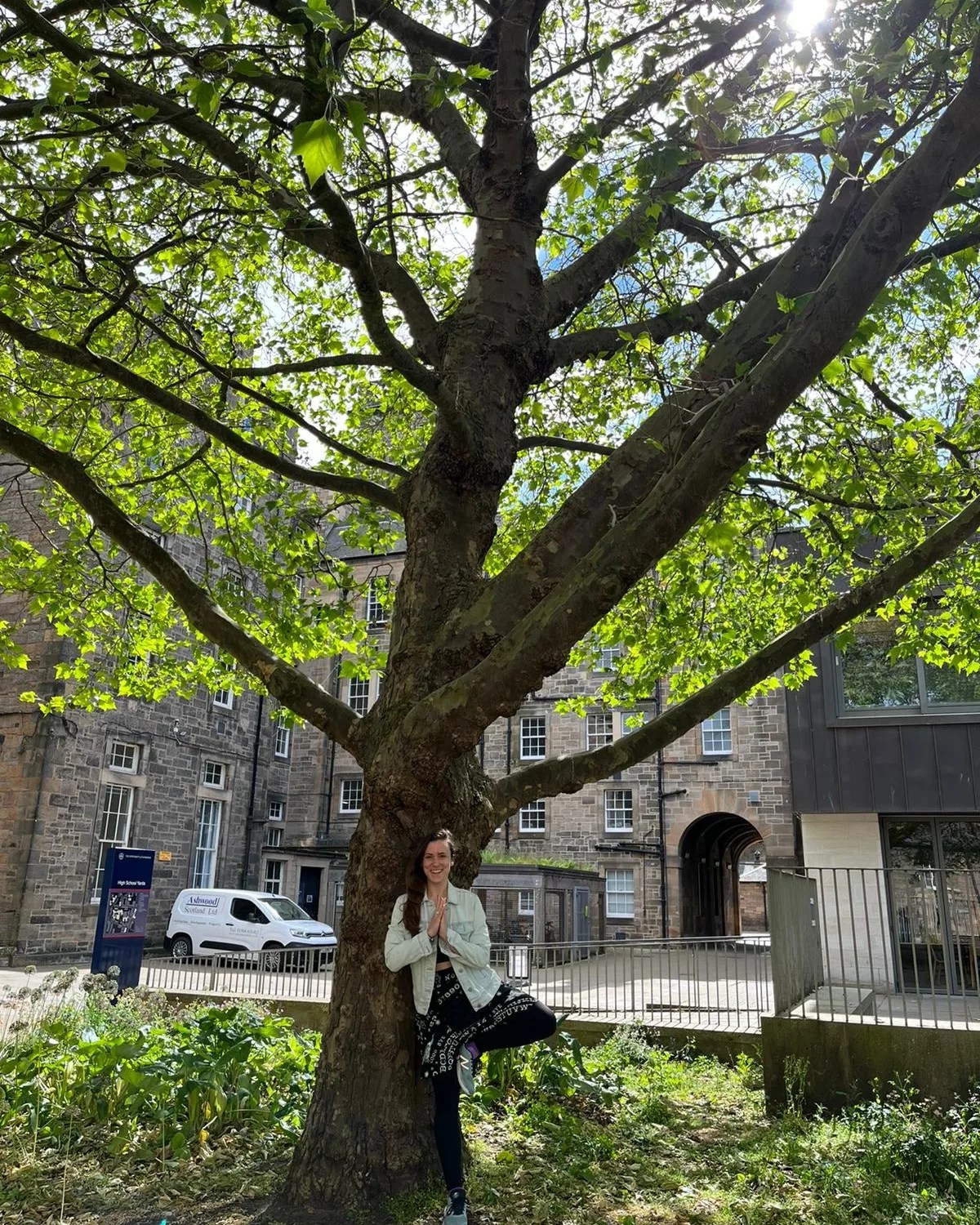
Close to the University of Edinburgh, on old campus or whatever, go through the arch, walk into the center of Surgeon’s Square, and to the left of the building there will be a tree, and that’s where Professor Knox’s house used to be.

The next day after a palate cleanser of hiking Arthur’s Seat and wandering through the botanical gardens, we ventured to the National Museum of Scotland for one specific purpose: to see these mysterious dolls that were found at the top of Arthur’s seat by a group of young boys. People thought they were effigies for all of the Burke and Hare victims because there were 17 dolls–they had 16 victims but one of their victims, old Donald, died of natural causes at Hare’s inn. They only have three or four on display at the museum. My only directions were “the dolls are in the basement,” but there was no basement we could find or any paper maps so I asked someone who worked there and she told me they only had replicas of the dolls because the real ones were being moved to the Anatomy Exhibit they were starting in early July. Light bulb! That’s why they moved his skeleton too! The next day, we went to The National Museum of Scotland so I could see the tiny dolls inside their coffins–but we learned that they had been moved to the Anatomy exhibit as well! Darn it. We had to go through the Kingdom of the Scots section, up one level, and then the dolls were across from the Industry and Empire room. The dolls were still creepy and we got to see an old hearse carriage. It was wild. Also the way Scottish respected their dead back then was a sign of status–if you could afford to dye your clothes black, if you had viewing hours, and so on, then that means you had money. Also there was a black rope on display and apparently it was used by witches to charm their cows into giving them their milk…or they were poisoning it. Witches be cool.

Learned about the history of hearses. Here’s a picture of a horse-drawn hearse from the early 1800s. Imagine being stuck behind that!

Me at the top of Arthur’s Seat, an incredibly accessible hike just a short distance from the heart of Edinburgh.

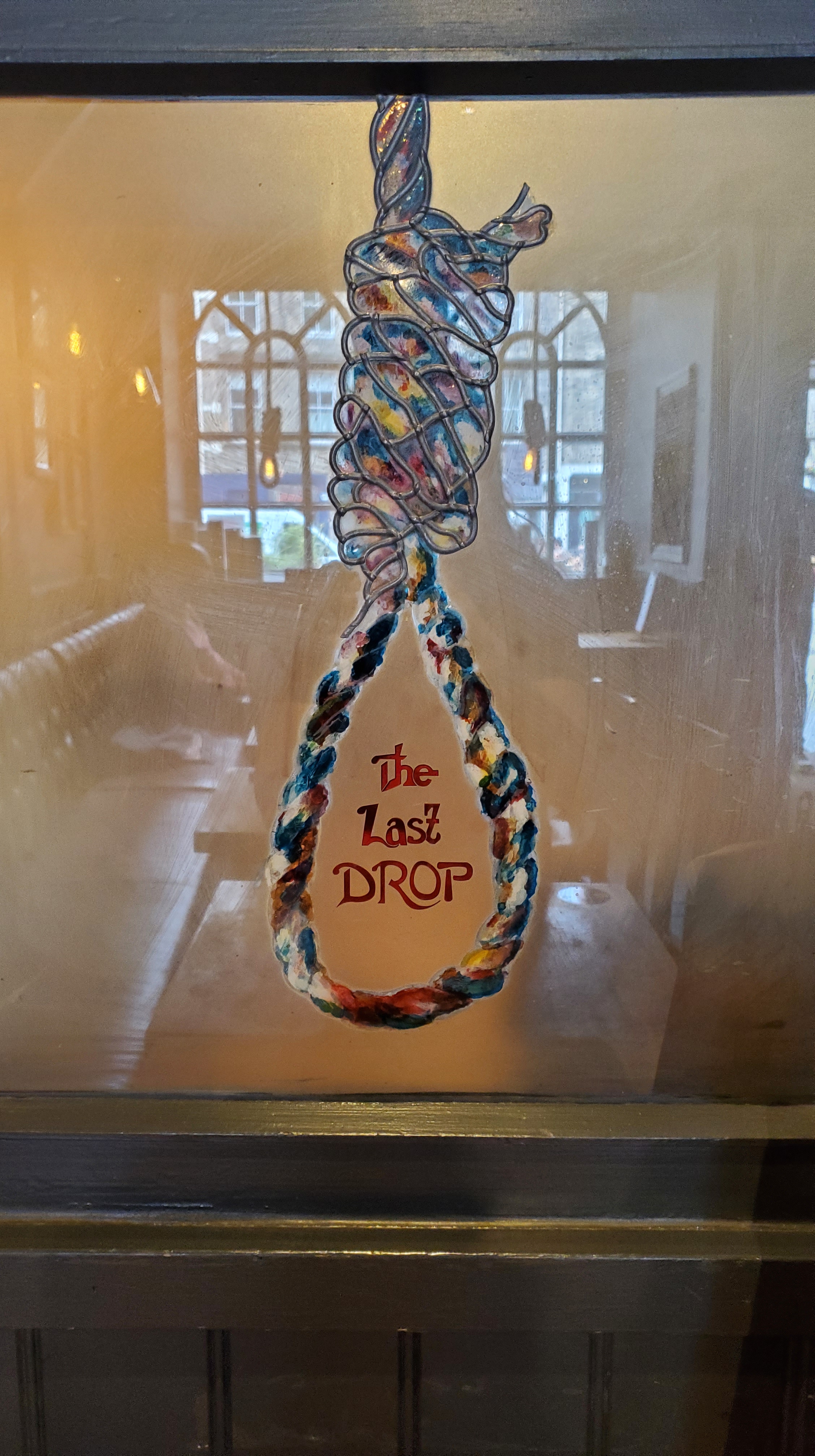
Within the same area as the site of the execution, we happened upon a pub called “The Last Drop.” I thought drop meant like the last sip of whiskey or beer, but it refereed to the final drink a person had before they were hanged, or also meant the last drop to break their necks.
I’m not sure why this story in particular sparked my interest. Maybe because I’m a wee bit Scottish, as my mom says. Maybe it was the mysterious coffin dolls that lured me. But what I do know is that brought me back to something I love: writing about creepy things.
Edinburgh was more gothic than I expected. The dark cathedrals, evening ghost tours, and graveyards. And of course, The Tour and Tale of Burke and Hare. I had fun puttering around the city in search of these historical true crime sites. :)
Thanks for reading!

 The Becca Jar